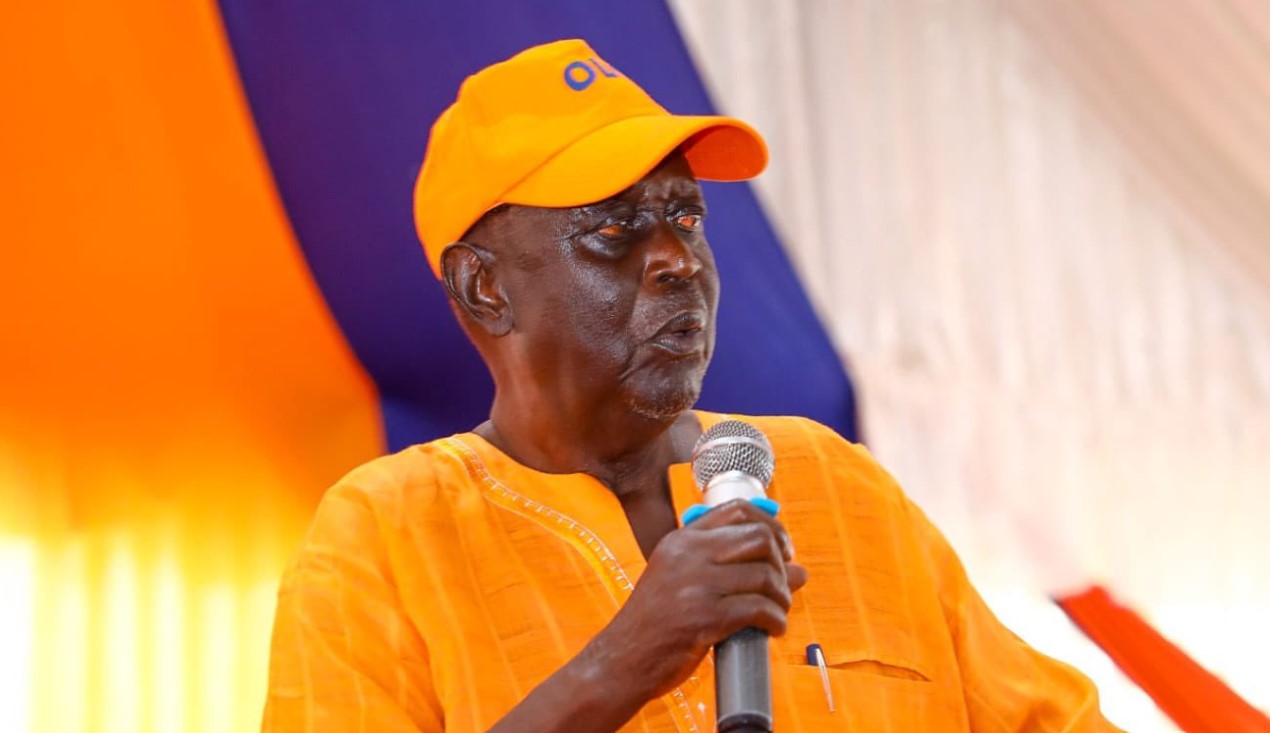
In his first major address since assuming leadership of the Orange Democratic Movement, Oburu Odinga has pledged a measured approach to guiding the Luo community through Kenya’s evolving political terrain, firmly rejecting strategies that would consign the region to permanent opposition.
Speaking at a Luo Leaders Forum in Kisumu, Oburu told delegates from Siaya, Kisumu, Migori, and Homa Bay counties that his leadership would prioritize caution and collective responsibility over impulsive political gambles.
“As a leader, I cannot plunge people into deep waters or take them to a place that is not secure,” he declared to resounding approval from the gathering.
The remarks signal a deliberate positioning as Oburu steps into the formidable shadow of his late brother, Raila Odinga, whose decades-long political career defined opposition politics in Kenya.
“I never applied to be the ODM party leader. I never dreamt that Raila would die and that I would bury him,” Oburu said, his voice thick with emotion. “His death hurts me deeply. I always believed he would bury me instead.”
Yet despite the weight of succession, Oburu made clear he would chart his own course. “I did not know there would come a day when I would have to wear his shoes. He is my brother, but his shoes are huge. I am not his copy-paste.”
The new ODM leader outlined plans to engage with President William Ruto’s United Democratic Alliance as a primary partner, building on the party’s existing participation in the broad-based government framework. But he insisted negotiations must proceed from unity and strength.
“There are people who want our community to remain in opposition as other communities continue to reap from the government,” Oburu warned. “That would be leading our people into danger.”
Drawing biblical parallels, he cast himself as Joshua completing Moses’s journey. “I will ensure I take you to Canaan as the remaining Joshua, even if the road passes through Singapore.”
Oburu urged the community to strengthen its political leverage through mass voter registration and turnout, emphasizing that electoral power remains the foundation of political influence in Kenya’s competitive democracy.