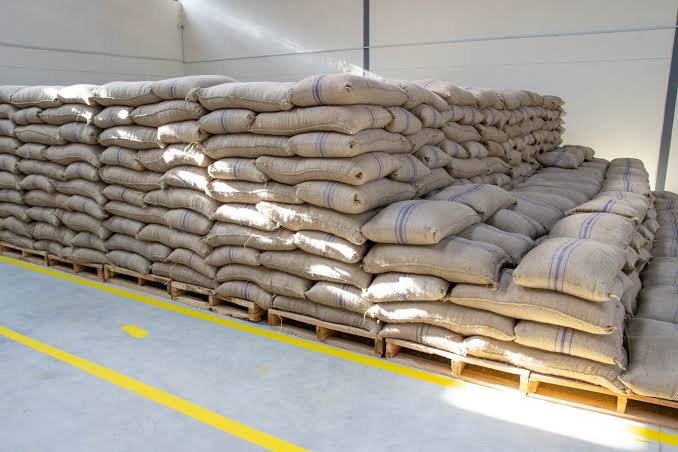
Kenya’s warehouse receipt system offers farmers an alternative approach to managing the timing of crop sales, potentially allowing them to access financing and better pricing opportunities by storing crops in certified warehouses rather than being forced to sell immediately after harvest when prices are often at their lowest point in the seasonal cycle. Understanding how this system works provides farmers with an additional tool for improving their financial outcomes from agricultural production.
The problem this system aims to address
Many Kenyan farmers face financial pressure to sell their harvest immediately after collection, often due to immediate cash needs and limited on farm storage capacity, despite crop prices typically being at their lowest point immediately following harvest when market supply is at its seasonal peak. This pattern means farmers frequently receive lower prices than they might achieve by waiting and selling later in the season when supply has diminished and prices have typically recovered, a structural disadvantage the warehouse receipt system specifically aims to help address.
How the warehouse receipt system works
Under this system, farmers deposit their harvested crops in certified, licensed warehouses, which assess and grade the deposited crop quality and quantity, then issue a warehouse receipt confirming this deposit, serving as a formal, tradeable document representing ownership of the stored crop. This receipt can then be used by the farmer in several ways, including using it as collateral to access financing from participating banks or other lenders, allowing the farmer to access cash relatively soon after harvest without needing to immediately sell the actual crop, or eventually selling the stored crop, potentially at a more favorable later point in the season, with the warehouse receipt serving as the instrument through which this later sale is transacted.
Benefits for participating farmers
The warehouse receipt system offers farmers several potential benefits, including access to immediate financing without requiring immediate crop sale, allowing them to meet urgent cash needs while retaining the option to sell their crop later at potentially more favorable prices, reduced post harvest losses, since certified warehouses typically offer better storage conditions than many farmers can provide independently, and access to formal, more transparent price discovery mechanisms compared to potentially less favorable terms farmers might negotiate individually with buyers immediately after harvest when their negotiating position is weakest.
Which crops and regions the system typically covers
Kenya’s warehouse receipt system has generally focused on key staple and cash crops where storage and quality grading standards have been well established, including grains such as maize, with the specific warehouses and participating regions reflecting where this infrastructure has been developed and where farmer organizations and relevant government agencies have actively promoted adoption of this system. Farmers interested in participating are encouraged to research whether certified warehouses participating in this system operate within reasonable distance of their specific farming location, since the system’s practical accessibility varies depending on regional infrastructure development.
Costs associated with using the warehouse receipt system
Participating in the warehouse receipt system involves certain costs, including storage fees charged by the certified warehouse for holding the deposited crop, and, where farmers use the receipt to access financing, applicable interest costs on that financing. Farmers are encouraged to calculate whether the potential benefit of improved later season pricing, combined with the value of accessing earlier financing, genuinely outweighs these associated costs for their specific situation, since the system’s value proposition depends on this cost benefit calculation working favorably for the specific farmer’s circumstances and the particular crop price dynamics in a given season.
Risks and considerations for farmers
While the warehouse receipt system offers potential benefits, farmers should understand associated risks, including the possibility that crop prices could actually decline rather than improve during the storage period, meaning the strategy of delaying sale does not guarantee a better outcome than immediate sale would have provided, alongside quality risks during storage, though certified warehouse standards are specifically designed to minimize this particular risk compared to less formal storage alternatives. Understanding these risks helps farmers make informed decisions about whether and how extensively to use this system for their specific crop marketing strategy.
How farmers can access and learn more about the system
Farmers interested in participating in Kenya’s warehouse receipt system are encouraged to connect with relevant agricultural extension services, farmer cooperative organizations, or directly with certified warehouse operators in their region to understand specific participation requirements, associated costs, and the practical process for depositing crops and accessing the various benefits this system is designed to provide, helping farmers make an informed decision about whether this approach fits effectively within their broader post harvest crop management and financial planning strategy.
The role of commodity exchanges in supporting this system
Kenya’s development of formal commodity exchange infrastructure has worked alongside the warehouse receipt system, providing more structured, transparent price discovery mechanisms that support farmers in making informed decisions about when to sell their stored crops. Farmers participating in the warehouse receipt system are encouraged to follow available commodity price information through these more formal channels, where accessible, rather than relying solely on informal local price information, helping inform their decision about optimal timing for selling their stored crop holdings based on more complete, reliable market information.