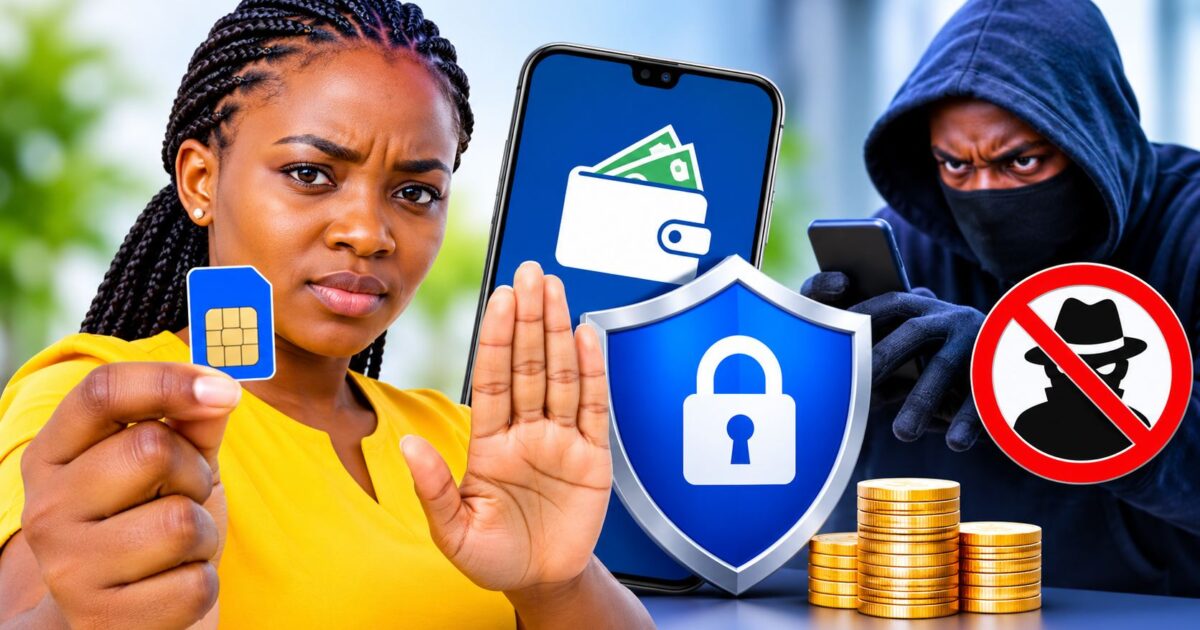
Given how deeply mobile money has become embedded in Kenyan financial life, protecting your SIM card and mobile money account from fraud represents an essential, practical financial security skill. Understanding common fraud tactics targeting mobile money users, along with concrete protective steps, helps Kenyans safeguard the funds and financial access this critical service provides.
Understanding SIM swap fraud
SIM swap fraud involves a criminal convincing a mobile network operator to transfer a victim’s phone number to a new SIM card controlled by the fraudster, often through social engineering tactics or, in some documented cases, insider cooperation at telecommunications outlets, after which the fraudster gains control of the victim’s phone number and, consequently, access to mobile money and other services linked to that number. This represents one of the more serious mobile money fraud risks, since successful SIM swap fraud can give criminals direct access to a victim’s mobile money account and any other services authenticated through that phone number.
Protecting against SIM swap attempts
Kenyans can take several steps to reduce their SIM swap fraud risk, including being cautious about sharing personal identification details that fraudsters might use to impersonate them when attempting to convince a mobile network operator to issue a replacement SIM, promptly reporting a lost or stolen phone to their network operator to reduce the window during which a fraudster might exploit the situation, and registering for any additional security features their network operator offers specifically designed to add extra verification steps before a SIM replacement can be processed.
Recognizing and avoiding social engineering scams
Beyond SIM swap specifically, mobile money users face various social engineering scams, including fraudsters posing as mobile network or mobile money representatives requesting personal identification numbers or other sensitive account details, fake prize or lottery notifications requesting a fee to release supposed winnings, and romance or relationship based scams that gradually build trust before requesting mobile money transfers. Understanding that legitimate mobile network and financial service representatives will never request a personal identification number, and maintaining healthy skepticism toward unsolicited requests for money or personal information regardless of how the request is framed, provides important protection against these common tactics.
Securing your physical phone and SIM card
Basic physical security measures, including using a secure phone lock screen requiring a passcode or biometric verification, avoiding leaving your phone unattended in public or easily accessible locations, and being cautious about lending your phone to others who might access mobile money functions without appropriate oversight, provide important baseline protection against unauthorized mobile money access through physical device compromise rather than remote fraud tactics.
Monitoring your mobile money transaction history
Regularly reviewing your mobile money transaction history, whether through periodic statement requests or regular review of transaction notifications, helps identify any unauthorized transactions promptly, allowing for faster reporting and potential recovery action compared to discovering unauthorized activity only much later through less frequent account monitoring. Setting up transaction notifications, where available, provides real time awareness of account activity that can help identify suspicious transactions as they occur rather than only through periodic manual review.
What to do if you suspect fraud has occurred
Kenyans who suspect SIM swap fraud, unauthorized mobile money transactions, or other mobile money related fraud are encouraged to contact their mobile network operator and mobile money provider immediately to report the issue and request appropriate account protection measures, such as blocking further transactions while the matter is investigated. Prompt reporting significantly improves the likelihood of limiting further fraudulent activity and potentially recovering funds, compared to delayed reporting that gives fraudsters additional time to complete further unauthorized transactions before protective measures are implemented.
Building ongoing mobile money security awareness
Given that mobile money fraud tactics continue to evolve, Kenyans are encouraged to stay informed about current fraud patterns through official communications from their mobile network and mobile money providers, alongside credible financial literacy resources, treating mobile money security as an ongoing area requiring continued attention rather than a one time precaution, given how central this financial service has become to daily economic life for the vast majority of Kenyan mobile money users.
Protecting elderly and less tech familiar family members
Elderly relatives and those less familiar with digital technology are often particularly vulnerable to mobile money fraud tactics, given potentially lower awareness of common scam patterns and, in some cases, greater trust in unsolicited callers claiming authority or legitimacy they do not actually possess. Family members are encouraged to proactively discuss mobile money security with elderly or less tech familiar relatives, helping them understand common fraud tactics and establishing a habit of checking with a trusted family member before acting on any unusual or urgent seeming mobile money related request or instruction they receive.